Trump may have returned with threats, but India isn’t flinching—it’s recalibrating. In a world loud with power plays, silence can be a weapon.
Donald Trump is back in the White House. Not as the unpredictable outsider who shook Washington in 2016, but as a twice-elected president entering his final term with nothing to lose and a loyal base demanding the revival of “America First” in its most unapologetic form. The world watches with unease. Allies scramble to assess what a second Trump term means for global trade, security architecture, climate cooperation, and multilateralism. But amid the diplomatic noise, one major power has chosen not to speak—India.
Trump’s political theatre has always blurred the line between ideology and performance. In his first term, he weaponised tariffs against friends and foes alike. He slapped duties on Chinese steel, Canadian aluminium, European autos, and Indian exports. He derailed the WTO’s dispute resolution system, threatened NATO partners with withdrawal, and unilaterally exited multilateral agreements like the Paris Accord and the Iran nuclear deal. India, despite its strategic convergence with the U.S., was not immune. In 2019, Trump removed India from the Generalized System of Preferences (GSP), eliminating tariff-free access to the U.S. market for $6 billion worth of Indian goods. The rationale? India was “not reciprocating.”
This may well be the time to breathe new life into the Atmanirbhar Bharat movement; not as a slogan, but as a strategy. As tariff threats loom again and economic coercion becomes a normalized tool of diplomacy, India must build deeper internal resilience. Not in pursuit of isolation, but as a means of insulation through strengthening domestic supply chains, investing in critical sectors, and reducing overdependence on any single market. A stronger, self-reliant India is better positioned to engage as a confident global actor, one not easily swayed by the turbulence of external politics.
More than ever, New Delhi must recognise that economic sovereignty underpins strategic sovereignty. In an era where trade can be turned into a tactical weapon, India’s preparedness will not come from protectionism but from purposeful competitiveness. By reducing friction within its business environment, accelerating high-value manufacturing, and shielding itself from over-concentration of imports in sectors like electronics, semiconductors, and pharmaceuticals, India can negotiate with strength, not dependence. The goal is not to isolate from the global order, but to rewire India’s role in it from participant to rule-shaper.
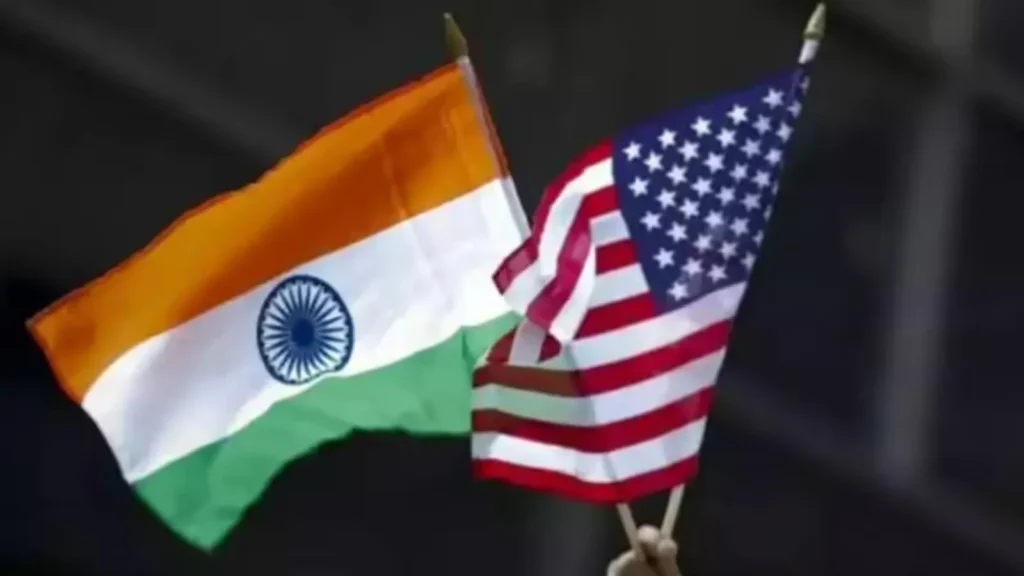
The Modi government, publicly cordial but privately cautious, absorbed the blow without escalating. There were muted protests, some retaliatory tariffs, and an eventual recalibration. But New Delhi never lost sight of the larger goal: India’s long game in the Indo-Pacific and its desire to deepen strategic ties with Washington regardless of who sits in the Oval Office. Trump’s unpredictability was frustrating, but it was also an opportunity to reassert Indian autonomy, to diversify partnerships, and to test the limits of transactional diplomacy without being cornered.
Now, in 2025, the stakes are higher and the tone is sharper. Trump has proposed a 10% universal import tariff, and even floated a 60% tariff on Chinese goods. His advisors are reportedly eyeing new restrictions on outsourcing, visa reforms targeting H-1B dependent industries, and a rollback of digital market access for foreign players. These are not idle threats. They are early signals that
Trump 2.0 is prepared to rewrite the rules of engagement again, only this time, with the full momentum of a final-term presidency.
India, with its $191 billion trade surplus with the U.S., should be concerned. But rather than raising alarms, it is calibrating its moves. There are no dramatic press conferences, no trade wars declared, no retaliatory slogans. This is not compliance; it is strategic silence. And in diplomacy, silence is often the most eloquent language of intent.
India’s muted response should not be mistaken for weakness or confusion. It is a conscious choice. Having weathered Trump’s first term, India now understands the contours of his personality-driven diplomacy. The key is not to appease or provoke, but to anticipate, and prepare. Behind the scenes, Indian negotiators are already lobbying on Capitol Hill, reaching out to Trump-aligned think tanks, engaging with the American business community, and exploring hedges through deeper trade diversification with the EU, ASEAN, Africa, and West Asia.
India also knows that public sparring with Trump rarely yields results. Allies like Germany and Canada tried direct confrontation in his first term. They paid the price. Japan and South Korea, on the other hand, opted for flattery and backchannel diplomacy, and fared better. India, having mastered the art of navigating global egos, is applying the same logic now. The calculus is simple: Don’t make yourself a headline. Stay in the room. Let others absorb the early fire.
But India’s silence is not just about Trump. It is also about timing. 2025 is not 2017. The world is different. China is more assertive. The U.S. is more divided. The Global South is more vocal. And India demographically youthful, economically ambitious, and geopolitically pivotal, is more confident. This is a nation that is no longer looking to be patronised or protected. It is positioning itself as a partner on equal terms, even with great powers who often speak in the language of coercion.
In this context, Trump’s tariffs are not just economic threats, they are narrative moves. He is telling the world that interdependence is weakness, that alliances are leverage, and that trade is a zero-sum game. But India, drawing from its civilisational patience and postcolonial caution, is telling a different story. A story of quiet preparedness, diversified dependencies, and a strategic middle path that avoids both subservience and confrontation.
The deeper irony is that even as Trump pushes India economically, he may need it geopolitically. The Indo-Pacific is still central to U.S. strategy. Countering China remains bipartisan consensus. And in a world where trust in the West is eroding after Afghanistan, Gaza, and Ukraine—India’s democratic heft and non-aligned legacy still carry weight. Trump may not believe in traditional alliances, but he understands transactional value. And India, with its market size, defence potential, and tech talent, offers plenty of that.
This silent dance between India and Trump is a study in asymmetry, not just of power, but of style. Trump is loud, India is quiet. Trump seeks deals, India plays the long game. Trump measures loyalty in dollars, India measures it in distance managed. And yet, their fates are interlinked not out of choice, but out of necessity. For all its unpredictability, the U.S. remains India’s most vital external partner in counterbalancing China, shaping technology norms, and navigating the global economic order.
The coming months will test this balancing act. Will India face fresh tariffs? Likely. Will Trump push for concessions on data localisation, pharma pricing, or market access? Certainly. Will India bend? Not easily. What we are witnessing is not a trade war or a love affair but a strategic tango between two nationalisms: one loud and impulsive, the other patient and adaptive.
As Trump begins his final term and prepares to cement his legacy, India is not clapping, nor is it cowering. It is calculating. And sometimes, in geopolitics, that is the loudest message of all.
Dr. Gaurav Vaid
Source: https://greaterjammu.com/epaper/epaper/edition/656/epaper-5-08-2025/page/6