There was a time when the world recognized war by its sound; the thunder of artillery, the whine of aircraft, the crack of gunfire. Today, it begins in silence. No borders are crossed, no bombs fall, no smoke fills the sky. Yet nations collapse, currencies crumble, and societies starve. The new arsenal of war is not made of steel and gunpowder but of sanctions, tariffs, and financial blockades. This is the age of the Silent Siege, where economics itself has become the weapon of choice.
In the twentieth century, economic warfare accompanied traditional conflict. Britain’s naval blockades during World War I starved the Central Powers into submission; the U.S. oil embargo on Japan in 1941 lit the fuse for Pearl Harbor. Economic tools were once used to weaken before striking. But in the twenty-first century, the order has inverted: the economic weapon is the war itself. When Russian banks were expelled from the SWIFT network after the invasion of Ukraine, the message was unmistakable, global finance had become an instrument of punishment. Iran, isolated for decades under U.S. sanctions, has been forced to construct an economy of survival, built on barter, middlemen, and digital shadows. China, for its part, faces its own form of siege through bans on semiconductors, quantum hardware, and AI chips.
The world no longer needs armies to isolate a nation; it can simply unplug it from the grid of globalization. Power has shifted from those who occupy territory to those who control transactions. Nations today can be besieged not by soldiers but by spreadsheets.
Sanctions, tariffs, and technology restrictions have become the new siege engines of our time, subtle yet devastating weapons designed not to destroy cities but to disable economies. Sanctions freeze assets, deny loans, and paralyse financial systems. They claim to target regimes but often suffocate civilians first. Tariffs masquerade as economic policy but are frequently acts of retaliation. Technology controls; export bans, data restrictions, or the denial of critical know-how — decide which nations innovate and which stagnate. Even the architecture of global finance has become militarised: access to SWIFT, credit ratings, or payment gateways can determine whether a country thrives or withers. Beneath all this lies a quiet hierarchy of control; those who command the dollar, the data, and the digital flows command the destiny of others.
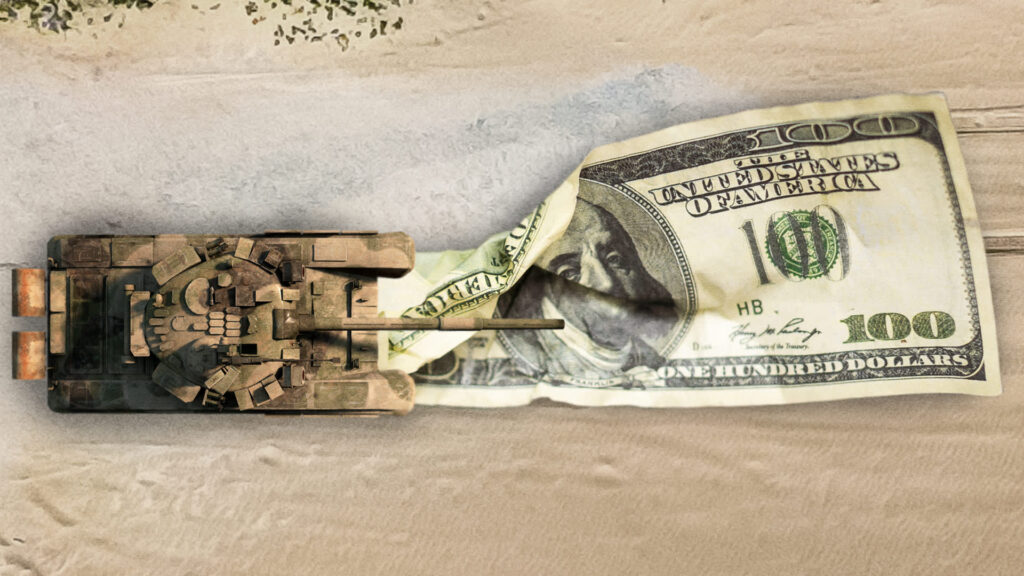
The United States, which once projected power through aircraft carriers and bases, now does so through currency. The dollar has become Washington’s most effective weapon, a geopolitical instrument disguised as a medium of exchange. Because global trade and energy remain dollar-denominated, fiscal leverage easily becomes political obedience. Even European allies have felt its reach. When America re-imposed sanctions on Iran in 2018, European firms doing business with Tehran faced exclusion from the U.S. market. Compliance followed swiftly not through fear of bombs but through fear of bankruptcy. In the twenty-first century, the dollar has become what the nuclear bomb once was: deterrent, threat, and shield all at once.
For India, this evolving landscape of economic conflict presents both peril and promise. It stands at the confluence of competing empires; dollar, yuan, and digital. Maintaining strategic autonomy has never been harder. The Russia equation epitomizes this balancing act. After Western sanctions on Moscow, India continued importing discounted Russian oil, settling payments in rupees and dirhams. Critics called it opportunism; New Delhi called it pragmatism. In truth, it was sovereignty by necessity, a refusal to outsource energy security to others’ political calculations.
The Iran dilemma is equally complex. The Chabahar port project, India’s critical gateway to Central Asia, remains trapped in the web of U.S. sanctions. Every waiver negotiated, every payment rerouted through back channels, is a reminder that foreign policy today is written not in treaties but in transaction codes. Meanwhile, China’s shadow looms large. Through the Belt and Road Initiative and the digital yuan, Beijing is building a parallel financial architecture designed to make Western sanctions obsolete. For India, countering this requires not imitation but contrast to stand for transparency, trust, and debt-free cooperation in a region crowded by coercion.
At the same time, BRICS+ is maturing from a loose club into a potential alternative ecosystem. The bloc’s conversations around a non-dollar settlement system or a gold-backed digital currency reveal a global appetite to escape dollar monopoly. Yet for India, the challenge is to reform without rupture, diversify without dividing, and lead without alienating. The art of balance is the soul of diplomacy in the age of sanctions.
Beyond geopolitics lies the human dimension, the silent casualties of invisible wars. Economic sieges appear bloodless, but their victims are made of flesh and hunger. When sanctions cut off insulin or cancer drugs to Iran, children die in hospitals unseen. When oil embargoes cripple Venezuela, it is the poor who queue for food while elites hoard privilege. When inflation spirals after currency freezes, it erodes not only wages but dignity. Unlike traditional warfare, there are no viral images of destruction to stir conscience. Suffering hides in spreadsheets, not headlines. Economic wars kill slowly through unemployment, scarcity, and despair, but they kill nonetheless.
For policymakers, this invisibility makes coercion seductive. “Smart Sanctions” sound humane, but the collateral damage is always human. Democracies embrace this form of warfare precisely because it offers the illusion of moral cleanliness; violence without blood, punishment without guilt. The ethical theatre of sanctions rests on one assumption: that economic pain will lead to political reform. History shows otherwise. From Cuba to North Korea, sanctions have strengthened authoritarian regimes by feeding their narrative of victimhood, while ordinary people bear the cost.
The greatest paradox of sanctions lies in their moral pretence. They are marketed as acts of ethical outrage, responses to aggression or human rights violations, yet their application reveals glaring hypocrisy. Russia is punished for invading Ukraine, but Israel faces no comparable penalties for its actions in Gaza. Iran and North Korea are ostracized for nuclear ambitions, yet Western allies with similar arsenals face no censure. Saudi Arabia’s war in Yemen provoked outrage but no embargo. The moral compass of sanctions points wherever power directs it. Justice, when filtered through geopolitics, becomes a privilege rather than a principle.
There is a colonial echo here; not of territory, but of transaction. Control the trade, and you control the story of development. The West once ruled through gunboats and governors; today, it governs through algorithms and access. Licenses, patents, software, and payment networks form the scaffolding of modern dependence. In the name of a “rules-based order,” the rule-makers continue to profit most. The Global South remains trapped between compliance and collapse, constantly adjusting its sovereignty to fit the architecture of others’ systems.
India’s digital public infrastructure from UPI to Aadhaar to its open fintech ecosystem, quietly challenges this paradigm. It offers a vision of openness without surrender, sovereignty without isolation. It demonstrates that technology can democratize rather than dominate, connect rather than colonize. In a world of gated systems and weaponized standards, this model carries moral resonance: that innovation can be inclusive, and access can coexist with autonomy.
As global blocs harden and the world fractures into rival financial camps, India’s strength lies in its refusal to choose sides. Non-alignment in the twentieth century was about avoiding military entanglement; in the twenty-first, it must mean avoiding economic captivity. An Indian-led framework for economic non-alignment could champion the right of every nation to trade without coercion and to develop without fear of financial punishment. It could insist on humanitarian exemptions to sanctions, transparent arbitration mechanisms, and the depoliticization of global financial tools. Through its G20 presidency, BRICS partnership, and growing voice of the Global South, India can propose a new ethic:
“No nation should be starved into submission. Dialogue, not deprivation, must be the instrument of accountability.”
Such a philosophy resonates far beyond South Asia. It speaks to Africa’s resource economies, to Southeast Asia’s trade hubs, to Latin America’s emerging democracies; all weary of being pawns in the chessboard of great-power economics. The Global South’s shared aspiration is not merely to survive within the existing order but to rewrite the terms of exchange, to transform economic dependence into collective resilience.
Economic warfare, ultimately, is not about money. It is about meaning. Every sanction is a story told to justify control; every blockade a moral narrative dressed as policy. Media headlines sanctify some embargoes as “defending freedom” and others as “protecting stability.” But beneath both lies the same principle: coercion through commerce. What we are witnessing is not only the weaponization of finance but the narrativization of power, where economic instruments wear the costume of virtue. The new battlefield is invisible yet omnipresent, conducted in silence but shaping every nation’s fate.
In this emerging order, victory will not be measured by territory gained but by autonomy retained; the ability of a nation to make its own choices, to trade on its own terms, and to speak without being sanctioned into silence. The twentieth century taught humanity how to kill without seeing the enemy; the twenty-first is teaching it how to conquer without crossing borders. The battlefield has moved from land to ledger, from missiles to markets, from tanks to tariffs. And in this Silent Siege, nations will not just fight for power, they will fight for the right to breathe economically.
The age of sanctions is not the end of war. It is its evolution; a war waged not with blood and bombs, but with bank codes and blockchains; a war fought in the shadows of finance, beneath the rhetoric of morality. It is the war that will decide who rules the twenty-first century, and who merely trades within it.