Hormuz Opens; Trust Does Not
The ships may move again, but mistrust has not moved with them.
The reopening of movement through the Strait of Hormuz is being read in some quarters as a sign of relief. Markets watch tanker traffic. Governments welcome lower risk to energy flows. Businesses prefer any sign of normality after weeks of tension. On the surface, it looks like a step away from crisis.
But a corridor reopening is not the same thing as a conflict ending.
What we are seeing is not peace in the traditional sense. It is a pause managed by caution, pressure, and necessity. Trade routes may reopen because the costs of disruption became too high. Public rhetoric may soften because escalation became too risky. Talks may restart because alternatives became too dangerous. None of this automatically creates confidence, and confidence is the missing ingredient.
That matters because confidence is what turns a ceasefire into stability, a negotiation into settlement, and a tactical pause into a durable peace. Without it, every move is interpreted suspiciously, every concession appears temporary, and every calm period feels reversible.
The current moment in the Middle East reflects exactly that tension. There are signs of restraint, yet threats remain. Shipping resumes, yet military alerts continue. Diplomatic channels stay open, yet political language remains sharp. The region is calmer than before, but not settled.
Even the return of talks should be read with care. Meetings can resume while core disagreements remain untouched. Public diplomacy often creates the image of movement before movement has truly occurred. In many crises, the first success of negotiations is not agreement, but the prevention of immediate deterioration. That has value, but it is not the same as resolution.
For the United States, this creates a familiar balancing act. Washington wants to protect global energy flows, reassure partners, contain escalation, and preserve deterrence. It also wants to avoid deeper military entanglement in another volatile theatre. Those goals do not always sit comfortably together. A strong posture can deter, but it can also provoke. Diplomacy can reduce risk, but it can also be attacked as weakness at home.
Iran reads the same landscape through a different lens. It seeks strategic space, sanctions relief, and recognition of its red lines. It also wants to avoid appearing to yield under pressure. In that environment, resilience becomes political currency. Endurance itself can be framed as success. That is why symbolic language often matters as much as material outcomes.
Israel’s position is shaped by immediate security concerns. It is less interested in declarations than in capabilities. If threats remain intact, if hostile networks continue to operate, or if deterrence appears weakened, any pause will be viewed with caution. Security establishments do not measure peace only by calmer headlines. They measure it by whether risk has genuinely declined.
Lebanon also remains part of the wider picture. Tensions involving Hezbollah mean that even when attention shifts to Hormuz or high-level talks, the northern front cannot be ignored. A flare-up there could quickly alter calculations for Israel and the region alike. This is the nature of interconnected crises: one theatre may quieten while another remains combustible.
That helps explain why diplomacy in the region often moves slower than outside observers expect. The visible conversation may concern shipping lanes, sanctions, or statements. The deeper conversation concerns fear, memory, and credibility.
Around these principal actors stand the Gulf states, each with its own calculations but a shared preference for stability. Saudi Arabia, the UAE, Qatar, Oman, Kuwait, and Bahrain understand that even limited confrontation can produce outsized consequences. Insurance costs rise. Investor confidence wavers. Supply chains slow. Tourism hesitates. Ambitious development plans depend on predictability, not permanent crisis.
For them, the reopening of Hormuz is welcome, but it is not enough. They need sustained calm, not temporary access. They need a region where markets do not swing with every military statement and where strategic shocks do not interrupt domestic transformation.
This is where the phrase “peace without trust” becomes real. Systems can function even when confidence is absent, but only at a cost: more hedging, more arms purchases, more intelligence activity, more contingency planning, more nervous markets, and less long-term confidence.
The Middle East has lived with this condition before. Periods of quiet have often coexisted with unresolved disputes beneath the surface. Sometimes the calm lasted months. Sometimes years. But when core issues remained untouched, the next crisis was rarely as distant as it first appeared.
There is another dimension often overlooked. Even when governments manage risk, societies remember instability. Families postpone plans. Businesses delay expansion. Students reconsider travel. Workers worry about prices. Investors price in uncertainty long after official optimism returns. Confidence is not rebuilt by one announcement or one reopened route. It returns slowly, if at all.
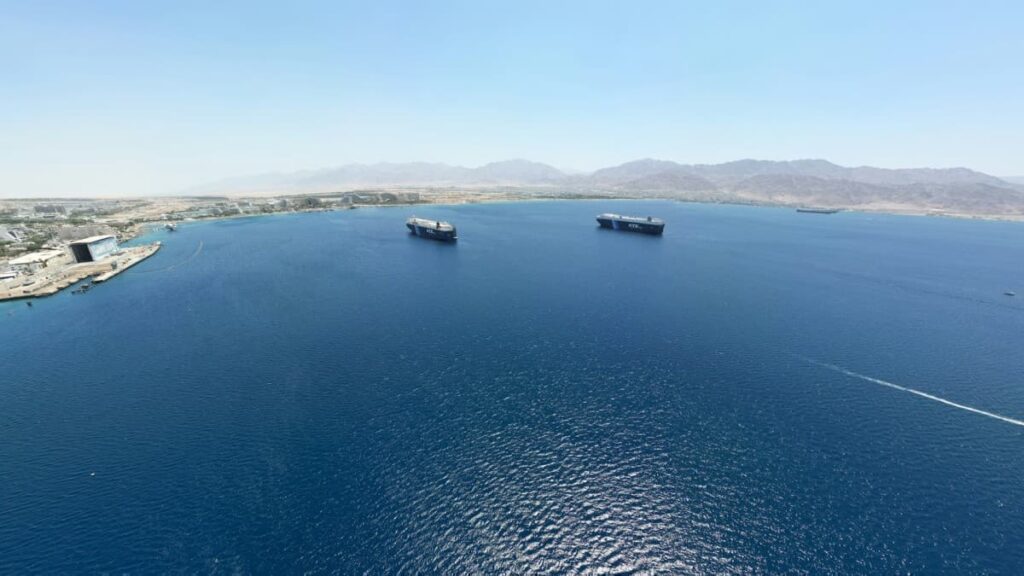
That is why the present moment should be read carefully. The absence of catastrophe is not the same thing as the arrival of peace.
It is also worth asking who is shaping the next phase. Formal talks matter, but so do informal channels. Countries not at the centre of the conflict can still influence outcomes by hosting meetings, carrying messages, or lowering tensions. Pakistan’s recent visibility in discussions around mediation reflects this reality. So does Oman’s longstanding role as a discreet diplomatic space. Quiet intermediaries often matter most when public confidence is weakest.
China, too, remains part of the wider equation even when it is not front and centre. Its interests are obvious: stable energy flows, secure trade routes, and a region that does not derail broader economic priorities. Beijing may prefer a lower profile, but strategic weight does not disappear because it is exercised quietly.
Russia also watches closely. Even when not central to the immediate process, major powers study how influence shifts, how alliances respond, and where opportunities emerge. In multipolar competition, no major crisis remains purely local.
Europe has its own stake as well. Energy prices, migration pressures, market volatility, and security dependencies all connect Middle Eastern instability to European politics. A flare-up in the Gulf can travel far beyond the Gulf. This is what modern conflict looks like. It is never confined to the map where it begins.
Another present reality is that deterrence and diplomacy are operating side by side. Naval assets remain deployed. Air defence systems stay alert. Intelligence activity does not pause simply because negotiators meet. In many modern crises, states prepare for escalation while speaking of de-escalation. This contradiction may appear uncomfortable, but it has become normal.
That also explains why rhetoric still matters. Leaders speak not only to rivals, but to domestic audiences, allies, markets, and institutions. A statement can be aimed at five different listeners at once. Public language may sound uncompromising even when private channels are more flexible.
And where does India fit into this picture? More directly than many assume.
India’s energy security is tied to the region. Its diaspora links are deep. Trade routes through the Arabian Sea and beyond matter to industry, consumers, and long-term growth. Millions of personal and commercial relationships connect India to the Gulf and the wider Middle East. When the region shakes, India feels the vibration.
That is why India’s approach must remain measured and practical. It cannot afford emotional reactions to every headline, nor can it ignore structural shifts. Strategic autonomy in such a moment means maintaining relationships across divides, protecting national interests, and reading events beyond surface narratives.
India has reasons to value stability with the Gulf, maintain dialogue with the United States, watch Iran carefully, and support de-escalation wherever possible. None of these positions are contradictory. They reflect the reality of a connected world where interests run in several directions at once.
There is also a larger lesson for policymakers everywhere. Peace cannot be reduced to movement in markets or the reopening of a chokepoint. Those are important signals, but they are not complete measures. A tanker passing through Hormuz tells us commerce is resuming. It does not tell us confidence has returned.
Markets may welcome immediate calm, but policymakers know that temporary access and lasting stability are different things. Shipping can resume faster than confidence returns. That gap between operational normalcy and political uncertainty is where many future crises are born.
That lack of confidence shows itself in many ways. Military assets remain on alert. Political statements remain guarded. Alliances are quietly tested. Red lines are restated. Contingency plans stay active. If reassurance had truly returned, the atmosphere would look different.
Some will still ask the simplest question: who won? That question may be less useful than it appears. In situations like this, there may be no clear winner. There may only be actors trying to avoid unacceptable loss while preserving leverage for what comes next.
And what comes next may not be dramatic. It may be quieter than war and less satisfying than peace. It may consist of guarded talks, selective cooperation, economic adjustment, and recurring suspicion. That can still be preferable to open conflict. But it should not be mistaken for resolution, because unresolved tensions do not vanish when ships move. They wait.
The real test of the current moment is not whether Hormuz has reopened for now. It is whether the region can move from managed caution to genuine confidence, from tactical restraint to political settlement, from coexistence under pressure to stability with trust. That transition is far harder than reopening a waterway.
Trade routes can reopen overnight. Trust usually cannot.
Dr. Gaurav Vaid
Freelance Writer & Analyst
gauravvaid2010@gmail.com
Source: https://epaper.greaterjammu.com/epaper/edition/936/epaper19-4-2026/page/6