When power is exercised without pause, restraint becomes the last measure of civilization.
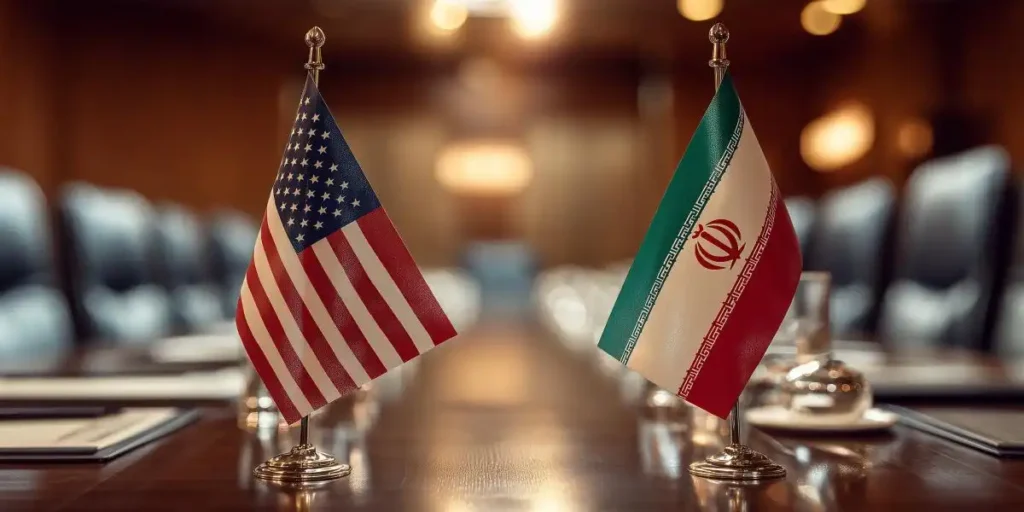
The United States and Israel have carried out a dramatic military escalation against Iran, and Iranian state media has confirmed the death of Supreme Leader Ayatollah Sayyid Ali Hosseini Khamenei. Tehran has declared national mourning, underscoring the magnitude of the moment. This development marks one of the most consequential turning points in West Asian geopolitics in decades. It is not merely the loss of a leader, but the removal of a central pillar of Iran’s political and ideological architecture.
The immediate reactions have been predictable. Iran has vowed retaliation. Missile exchanges have followed. Markets have responded with volatility. Governments across the Middle East have called for restraint. Around the world, commentators have rushed to declare either the dawn of a new war or the collapse of an old order.
Beyond the strategic calculations and political reactions lies the human cost. Reports from the ground indicate civilian casualties, including women and children, as military exchanges intensified. The loss of innocent lives, particularly that of children, is a tragedy that transcends geopolitics. No strategic objective, however defined, can erase the moral weight of civilian suffering. In moments of confrontation, it is civilians who bear consequences they neither chose nor shaped.
Yet moments of magnitude require discipline more than drama.
This confrontation did not begin overnight. The United States, Israel, and Iran have existed in varying degrees of hostility for decades, shaped by nuclear tensions, proxy theatres, sanctions regimes, covert actions, and competing deterrence doctrines. The current escalation, whatever its final scope, sits within a longer arc of strategic friction. The strike may be historic. The rivalry is not.
Terminology matters. Governments involved have described their actions as a military operation, not a declared war. That distinction is not cosmetic. War implies open-ended mobilisation, treaty activation, and systemic global confrontation. A military operation suggests defined objectives and limited scope. Whether events remain contained will depend not on language alone but on the scale of retaliation and the restraint exercised in the coming days.
The internal Iranian dimension cannot be ignored. Khamenei led Iran for over three decades. His authority was institutional as much as personal. Iran’s system was built to endure pressure. Yet leadership transitions under external shock carry risk. The greatest destabiliser in such moments is uncertainty. If succession proceeds within established constitutional mechanisms, the state consolidates. If fragmentation emerges, unpredictability follows. Power vacuums rarely remain empty for long.
The regional response deserves close attention. Many Middle Eastern states have adopted cautious public positions. This is not silence born of indifference. It is strategic calibration. Gulf economies sit within missile range. Energy corridors remain vulnerable. No state in the region benefits from uncontrolled escalation. Strategic ambiguity, in this context, becomes an instrument of stability rather than hesitation.
There is also a temptation to reduce this crisis to sectarian binaries. That would be analytically shallow. While Shia-Sunni dynamics influence alliances and narratives, this confrontation is fundamentally strategic. It concerns deterrence, regional balance, nuclear thresholds, and power projection. Religious identity is a layer. It is not the engine driving events.
Speculation has surfaced about instability in neighbouring countries such as Pakistan and Afghanistan forming part of a wider design. These states indeed face internal tensions and cross-border frictions. But there is no verified evidence that their turmoil was orchestrated as preparation for this confrontation. Parallel fragility in a stressed region does not automatically imply coordinated planning.
Another dimension that cannot be ignored is the domestic reaction in countries far removed from the battlefield. In India and elsewhere, some have celebrated reported developments while others have condemned them. Public emotion is understandable in polarised times. But foreign policy cannot be reduced to partisan reflex.
India’s engagement with Iran has historically been pragmatic. It has included energy cooperation, cultural ties, and strategic connectivity projects such as Chabahar Port, which provides access to Afghanistan and Central Asia. At the same time, India maintains strong defence ties with Israel and a deepening strategic partnership with the United States. Multi-alignment has been India’s doctrine. That doctrine requires sobriety, not symbolic alignment with foreign narratives.
India’s relationship with Iran has never been ideological. It has been strategic. Before sanctions constrained imports, Iran was a significant supplier of crude oil to India. Energy security underpins economic growth, industrial production, and domestic stability. The Chabahar project was not sentimental diplomacy. It was a calculated effort to secure regional access independent of Pakistan’s geography. Engagement with Tehran reflected national interest.
Equally, India’s growing partnership with Washington and its close security cooperation with Israel are grounded in interest. Defence technology, intelligence sharing, trade, and Indo-Pacific alignment are real considerations. Mature foreign policy recognises that interests converge in some areas and diverge in others.
It is important to separate grievances from judgment. Trade disputes, tariff rhetoric, and sanctions pressure have at times complicated India’s relations with the United States. But celebrating or condemning a foreign military action should not become an extension of domestic political score-settling. National interest demands clarity, not emotional alignment.
Does this mean the world is at war? Not yet. A world war requires sustained direct engagement between major power blocs across multiple theatres. At present, the confrontation remains geographically concentrated. However, the risk lies in escalation ladders. Retaliation cycles, miscalculation, or widening theatres could transform a regional military confrontation into something far harder to contain.
Energy markets illustrate the stakes. The Strait of Hormuz remains one of the most critical maritime chokepoints in the world. Any prolonged disruption would ripple through oil prices, insurance costs, shipping routes, and inflation globally. Nations far from the battlefield would feel the consequences at fuel pumps and in food prices. Economic stability is often the silent casualty of military escalation.
There is also a deeper legal and normative question. Targeted killing of a sitting supreme political authority under claims of self-defence sets a precedent. States justify such actions within their strategic logic. Critics question proportionality and sovereignty. Regardless of one’s position, normalization of leadership decapitation reshapes expectations of international conduct. Middle powers must observe carefully. Precedents once set rarely remain confined.
Beyond the immediate exchange of force lies a deeper strategic reckoning. Military actions of this scale do not end with the last missile launched; they reshape calculations across capitals. Allies reassess commitments. Adversaries recalibrate deterrence. Neutral states review vulnerabilities. Even if escalation is contained, trust deficits widen and diplomatic channels grow more fragile.
There is also the question of precedent. When major powers justify high-level targeted strikes as necessary for security, the threshold of acceptable conduct subtly shifts. Other states observe, learn, and adapt. Deterrence becomes more personalised. Leadership becomes more exposed. Security doctrines harden. In such an environment, fear can quietly replace predictability.
For the broader international order, the risk is gradual normalization of exceptional measures. What is defended today as urgent necessity may tomorrow become routine strategy. That trajectory demands careful scrutiny, particularly from middle powers that depend on stable rules rather than raw dominance.
Stability in the twenty-first century will not be preserved by overwhelming force alone. It will depend on restoring communication, rebuilding minimum trust, and reasserting the principle that escalation must have limits. Without those limits, even contained confrontations can accumulate into systemic instability.
The modern battlefield is not only physical but informational. Minute-by-minute updates shift narratives rapidly. Early reports often conflict. Claims and counterclaims circulate before verification stabilises. Panic can outrun facts. In such an environment, discipline becomes a civic responsibility. Responsible analysis requires waiting for convergence of credible information rather than amplifying every unverified development.
The real danger now is not the strike itself but the reaction to it. History often turns not on the first missile but on the first overreaction. Wars expand when pride overrides prudence and rhetoric outruns strategy.
For India, the path forward must rest on three pillars. Protect national interests, including energy security and diaspora safety. Preserve strategic autonomy and avoid entanglement in rigid blocs. Support de-escalation and diplomatic re-engagement wherever possible. Strategic maturity lies in engagement without entrapment.
Beyond immediate calculations, a larger geopolitical shift is unfolding. The Middle East now sits at the intersection of American security commitments, Chinese energy dependence, Russian regional positioning, and European economic vulnerability. Every escalation carries layered consequences. A misstep in Tehran can influence currency markets in Asia, security doctrine in Europe, and political rhetoric in Washington.
Equally significant is the psychological impact. When leadership decapitation becomes part of modern statecraft, deterrence theory itself evolves. States may harden positions, accelerate capabilities, or deepen alliances. The cycle of insecurity can become self-reinforcing. Stability in such an environment depends less on dominance and more on calibrated restraint.
The choice before global actors is stark. They can allow retaliation to define the tempo of events, or they can allow diplomacy to interrupt escalation. The former path offers emotional satisfaction but long-term volatility. The latter demands patience and compromise but preserves space for recovery.
Statesmanship is tested not in comfort but in crisis. The measure of maturity lies in choosing prudence over passion, clarity over noise, and stability over spectacle.
The headlines speak of missiles and retaliation. The wiser conversation must speak of responsibility.
Because in geopolitics, escalation is easy. Responsibility is rare. And history ultimately remembers those who chose restraint when the world demanded reaction.
Dr. Gaurav Vaid
Freelance Writer & Analyst
gauravvaid2010@gmail.com
Source: https://epaper.greaterjammu.com/epaper/edition/887/epaper-2-3-2026/page/6