A constitutional democracy on display, not to reassure the world, but to remind it that stability does not require explanation.
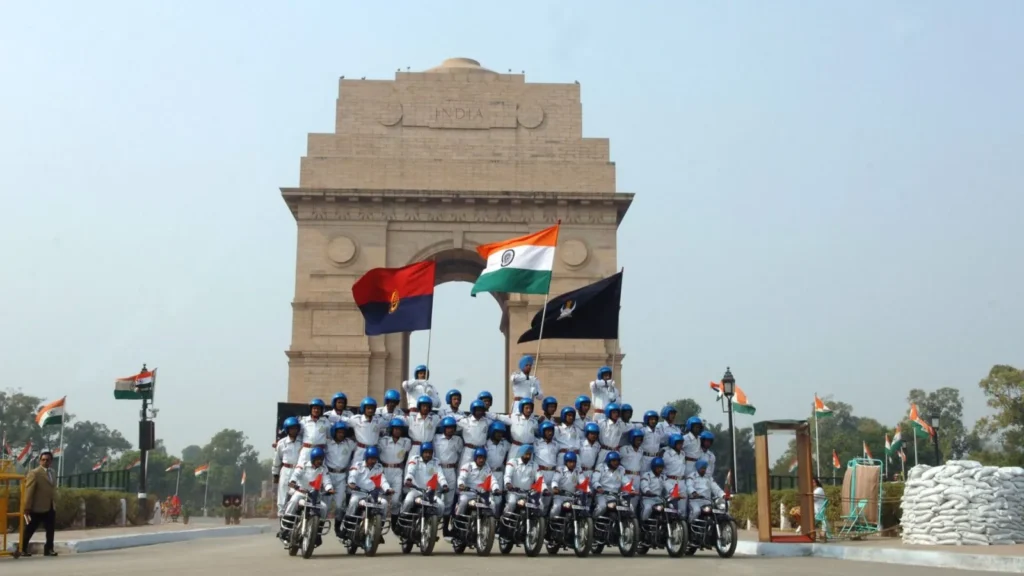
If India’s Republic Day parade is read merely as ceremony, its meaning is lost. If it is read as reassurance, it is misunderstood. And if it is read as a plea for approval, it is misread entirely. This year’s parade was something rarer: a declaration without declaration, a message delivered without apology, clarification, or pedagogic intent.
Europe’s top leadership sat on Kartavya Path not as honoured spectators of a feel-good democracy showcase, but as witnesses to a state that no longer feels compelled to translate itself for others. In today’s world, that refusal to explain is the real edge.
India did not sanitise its Republic Day for international comfort. There was no attempt to project a conflict-free, frictionless republic. The parade unfolded as it always has: disciplined, restrained, constitutional, even as security forces were engaged in live counter-terror operations in Jammu and Kashmir. This simultaneity was not coincidental. It was instructive.
India chose not to pause its constitutional ritual to issue disclaimers about its internal security challenges. It did not suspend celebration until perfect normalcy was achieved. It did not separate democracy from force, or rights from responsibility. The message was implicit but unmistakable: the Indian Republic does not wait for ideal conditions to assert constitutional order. It sustains constitutional order precisely because conditions are not ideal. This was not spectacle. It was statecraft.
What distinguished this Republic Day was not escalation, but normalcy maintained under strain. In many states confronting internal security threats, national ceremonies become either hyper-militarised displays of fear or carefully edited exercises in denial. India chose neither. There was no emergency rhetoric and no securitised language seeping into the constitutional ritual. The parade did not become an exercise in chest-thumping, nor did it pretend that the Republic exists in a vacuum insulated from violence.
This discipline matters. It signals a state confident enough to absorb shock without theatrics. Counter-terror operations in Jammu and Kashmir were conducted as administrative necessity, not political spectacle. The Republic Day parade proceeded as constitutional routine, not compensatory nationalism. This separation between force used and identity asserted is the hallmark of a mature state.
The decision to invite the European Union, rather than a single European capital or a former colonial power, was deliberate. India was not seeking validation. It was setting context. Europe today is uneasy. Ukraine shattered illusions of perpetual peace. Dependence on external security guarantees has become explicit. Moral certainty has collided with strategic constraint. In such a world, Europe is no longer exporting models; it is quietly shopping for stability.
India offered no model. Instead, it offered exposure to a democracy that governs under pressure, absorbs violence without collapsing into emergency, and conducts counter-terror operations without suspending constitutional rhythm. For European leaders accustomed to norm-based discourse divorced from hard security, this was not a comfortable lesson. But it was a necessary one.
No Republic Day commentary can be honest if it ignores Jammu and Kashmir. While tanks rolled ceremonially in Delhi, real weapons were in use elsewhere, not in assertion of power, but in defence of civilians and the prevention of terror normalisation. These encounters were not exceptional events warranting diplomatic footnotes. They were routine, bureaucratic, and grim. That is precisely the point.
India did not frame Kashmir as an aberration to be explained away for foreign consumption. It treated it as a security reality managed within the constitutional framework, not above it and not outside it. This is where many external narratives fail. They demand either romantic peace or spectacular repression. India offered neither. It offered continuity.
For decades, India’s strategic autonomy was caricatured as indecision. Today, it reads as insulation. Europe’s presence did not signal alignment. It signalled recalibration, an acceptance that India will not mirror Western positions on Russia, Israel, China, or global governance, and that engagement must proceed regardless. This was not convergence of values. It was convergence of realism.
India did not trade ambiguity for access. It did not soften positions for applause. It did not declare partnerships it would later struggle to honour. It simply stood still and was recognised.
Perhaps the most telling feature of this Republic Day was what India chose not to do. It did not issue moral sermons. It did not offer curated victimhood. It did not translate its internal contradictions into digestible talking points. It assumed that serious powers would understand, and that those who did not were no longer its primary audience.
This marks a quiet but profound shift. India is moving from being a democracy that seeks comprehension to one that demands engagement on its own terms. External observers often demand explanation where a sovereign state offers governance. Kashmir is routinely framed abroad as a moral puzzle rather than a security theatre shaped by cross-border terrorism, radicalisation networks, and decades of proxy conflict. India’s refusal to foreground Kashmir as a talking point was not avoidance. It was rejection of the idea that its internal security challenges require periodic moral certification.
In doing so, India implicitly challenged a comfortable Western assumption: that democracy is legitimate only in conditions of tranquillity. The Indian experience suggests the opposite. Democracy’s credibility is proven precisely when it survives disorder without abandoning form.
Europe’s presence should therefore be read less as endorsement and more as inquiry. The European Union arrives in India at a moment of strategic exhaustion. Normative confidence has been blunted by war on the continent. Economic interdependence has collided with geopolitical coercion. The belief that rules alone can guarantee order no longer convinces even its most ardent proponents.
India represents a different equilibrium. Order sustained by institutions rather than alliances. Legitimacy derived from continuity rather than consensus. Security managed domestically rather than outsourced. This is not a model Europe can replicate wholesale, but it is one it increasingly needs to understand.
What this Republic Day demonstrated most clearly is that India’s strategic autonomy is no longer a posture. It is infrastructure, embedded in defence procurement, diplomatic hedging, refusal to moralise selectively, and insistence on managing its own fault lines. Europe’s attendance implicitly acknowledged this reality. Engagement with India now proceeds on the assumption that disagreement is permanent, not pathological.
The quiet confidence of this Republic Day also carried a message beyond Europe. To adversaries, it signalled that India will neither be provoked into overreaction nor pressured into performative restraint. Counter-terror operations will continue without spectacle, apology, or suspension of democratic rhythm. To partners, it conveyed that engagement with India requires comfort with complexity. There will be no scripted alignment, no rhetorical synchronisation, and no transactional loyalty. India will cooperate, but only as itself.
Perhaps the most consequential shift revealed this Republic Day is psychological. India appears to be moving past the post-colonial reflex to be understood, certified, or applauded. This is not indifference to global opinion. It is prioritisation. Serious powers, India seems to suggest, will engage on substance. Others may comment.
In a world of declarations, India chose demonstration. In a world of alignment demands, it chose coherence. In a world of noise, it chose institutional rhythm. Europe’s presence did not transform this Republic Day into an international event. Rather, the Republic Day transformed Europe’s presence into a moment of recognition.
Not recognition of perfection.
Recognition of durability.
That, in the long arc of power, is the quieter and stronger stroke.
Dr. Gaurav Vaid
Freelance Writer and Analyst
gauravvaid2010@gmail.com
Source: https://greaterjammu.com/epaper/epaper/edition/852/epaper-28-1-2026/page/6