They See the Horizon. You See the Invoice.
There was a time when geopolitics felt like someone else’s problem. Wars played out on maps in the back pages of newspapers. Trade agreements were signed in conference halls most people would never visit. Diplomatic summits were the kind of thing you skipped past to get to the sports section. Life went on, largely undisturbed by whatever was happening on the other side of the world.
That comfortable distance is gone.
Today, a conflict thousands of kilometres away can push up the price of fuel at your local petrol station. A disrupted shipping lane you’ve never heard of can make your grocery bill heavier by the end of the month. A technology dispute between superpowers can quietly reshape the job market in your city. The world has grown so tangled together that global events no longer stay global. They show up at the kitchen table.
And yet, for all that interconnection, governments and the people they govern seem to be living in two entirely different worlds.
Governments speak in the language of strategy, resilience, security, supply-chain diversification, energy independence, semiconductor access, and maritime corridors. To policymakers, this isn’t abstract talk. It’s preparation. They lie awake worrying about vulnerabilities that won’t become obvious for years. They build diplomatic relationships before crises erupt, seek alternative energy sources before shortages hit, and invest in redundancy because they’ve seen what happens when you don’t.
Citizens encounter the same world through an entirely different lens. Not through policy papers or strategic briefings, but through the electricity bill, the fuel pump, the school fee notice, and the rent that keeps climbing. While governments are preparing for tomorrow, families are trying to get through this month.
Governments are expected to think in decades. Citizens are focused, quite reasonably, on surviving the week. Inflation doesn’t wait for long-term planning to pay off. Rent is due now. Medical expenses arrive now. This difference in time horizons sits quietly at the heart of so much political frustration today, and it’s worth naming honestly rather than talking around it.
You can see this tension almost everywhere you look. In Europe, governments talk about energy sovereignty and defence preparedness while households wrestle with heating costs. In the United States, Washington debates strategic competition with China and supply-chain security while many families are simply trying to manage debt and afford groceries. Across the developing world, leaders pursue infrastructure partnerships and international investment while millions face rising costs and uncertain futures.
India is living this tension in particularly sharp relief. The country is expanding its diplomatic reach, deepening strategic partnerships, punching above its weight in global forums, and positioning itself as a major voice in a reshaping world order. All of that matters. And yet, at the same time, ordinary Indians continue to face real pressures, inflation, employment uncertainty, rising costs, and the quiet anxiety of household budgets that don’t quite stretch far enough. Both things are true simultaneously, and pretending otherwise helps no one.
The question citizens instinctively ask is entirely fair: yes, but what does any of this do for me? When a government secures an energy agreement abroad, when a leader returns from a summit with new partnerships, and when investment corridors are announced, people want to know whether their lives will actually improve. That’s not cynicism. That’s democracy working as it should.
The honest answer, though, is complicated. Because what we are living through isn’t a single, neat crisis. It’s several crises overlapping at once, each making the others worse. The war in Ukraine rewrote global food and energy markets. Instability in West Asia keeps oil prices volatile and shipping routes uncertain. The US-China rivalry is reshaping technology, manufacturing, and investment flows worldwide. Climate disruption is squeezing agriculture and infrastructure. Artificial intelligence is beginning to redraw entire labour markets faster than anyone can regulate. These aren’t separate stories. They are chapters of the same unsettling story, and governments and citizens are both caught inside it, just reading from different pages.
What makes the present moment particularly difficult is that uncertainty itself has become a permanent feature of public life. A generation that grew up expecting greater stability, rising prosperity, and steadily expanding opportunities is now confronting a world that feels increasingly unpredictable. Economic shocks arrive before previous ones have fully faded. Political crises overlap with technological disruption. Markets react instantly to events unfolding thousands of kilometres away. For many people, the challenge is no longer a single crisis but the feeling of living in a state of continuous adjustment, where certainty has become rare and adaptation has become a daily necessity.
For decades, the dominant faith was that deeper globalisation meant greater stability. If supply chains stretched across continents and markets grew more interconnected, surely the shared interest in keeping things running smoothly would prevent serious disruptions. That faith hasn’t entirely collapsed, but it’s been badly shaken. The same interdependence that made goods cheaper and markets more efficient also created vulnerabilities that now feel impossible to ignore. A conflict in one country hits prices in another. A shortage in one industry ripples through a dozen more. Dependence, it turns out, cuts both ways.
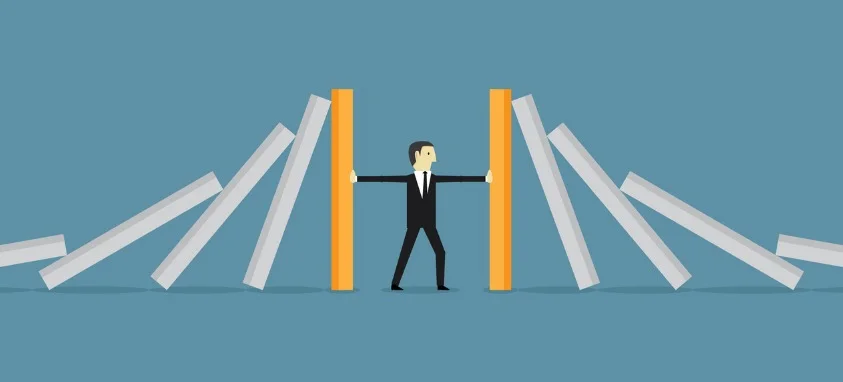
So, governments have started quietly changing direction. Resilience is replacing efficiency as the new organising principle. Countries are building strategic reserves, reshoring critical manufacturing, diversifying supply chains, and seeking greater control over the technologies and resources their futures depend on. It makes strategic sense, even when it costs more in the short term.
But citizens see the cost first. They hear about long-term investments in resilience while facing very short-term pressure on their savings. They’re told about tomorrow’s security while today’s bills pile up. That frustration is not irrational. It’s the natural result of a gap between what governments are doing and what people can feel.
What makes this especially difficult is that good preparation is, by design, invisible. If a government strengthens supply chains and no crisis occurs, no one throws a parade. If strategic reserves prevent a shortage, the public may never know what was avoided. Political systems, and the media environments they operate in, reward dramatic responses to visible disasters far more than quiet preparation for ones that never happen. In the age of social media, where economic anxiety travels fast and outrage travels faster, complex international realities get compressed into simple narratives that rarely do justice to what’s actually happening.
The result is a public conversation that often frames this as a binary choice: national strategy or public welfare. But no serious government can actually afford to choose. A country cannot ignore external risks simply because its citizens are under pressure, and it cannot pursue geopolitical ambitions while being indifferent to what ordinary life actually feels like. Both are real obligations, and the governments most likely to succeed in the coming decade will be those who can hold both simultaneously, preparing for the future while demonstrating that they see the present.
At the centre of all of this is something that doesn’t show up in strategic frameworks but matters enormously: trust.
History shows, again and again, that people can endure considerable hardship when they feel they’re part of something larger, when they believe the difficulty has a purpose and that those leading them understand what they’re going through. The opposite is equally proven. When people feel disconnected from decisions being made in their name, or excluded from the benefits of long-term plans, frustration curdles into something harder and more lasting.
That lesson matters now more than ever. We may be entering a prolonged stretch of overlapping pressures, geopolitical competition, technological disruption, economic adjustment, and strategic uncertainty, without any single defining moment to rally around. Just a slow, grinding succession of challenges that gradually reshape how nations operate and how people live.
Navigating that well requires something from both sides. Governments need to recognise that economic indicators and strategic maps don’t capture what ordinary life actually feels like. Citizens may need to recognise that many of the pressures bearing down on them originate far beyond any government’s ability to simply fix with domestic policy. Both things are true. And holding both truths at once, without collapsing into either cynicism or blind deference, may be one of the most important forms of political maturity our era demands.
Because the deeper story here isn’t really a struggle between governments and the people they serve. It’s two different experiences of the same crisis. One world is trying to prepare for what’s coming. The other is trying to get through what’s already here.
A nation’s strength has never been measured solely by the sophistication of its strategy, nor solely by the resilience of its people. It lies in the relationship between the two, in whether the distance between those two worlds can be bridged, or whether it quietly grows until it becomes something harder to cross.
History doesn’t tend to ask whether governments planned cleverly or whether citizens worried too much. It asks whether, when things got hard and uncertain, a society found a way to move forward together.
That’s still the question. And we’re all still in the middle of answering it.
Dr. Gaurav Vaid
Freelance Writer & Analyst
gauravvaid2010@gmail.com
Source: https://greaterjammu.com/epaper/epaper/edition/989/epaper-6-6-2026/page/6