Trump and Putin’s Anchorage meeting was more than a handshake; it was a test of whether global order can bend to peace, or break under power.
Putin shaking hands in Alaska was always destined to dominate headlines. But it is the meaning behind that handshake, the timing, the venue, the theatre that has left the world both unsettled and intrigued. In the icy air of Anchorage, where Russia once held sovereignty before selling the territory to the United States in 1867, history seemed to fold in on itself. More than a bilateral summit, the encounter was a performance in power politics, one where every word, every pause, and every smirk was weighed not just by diplomats but by ordinary citizens around the globe.
This symbolic geography matters. Diplomacy has always borrowed from history’s stages,think of Yalta in 1945, Camp David in 1978, Reykjavik in 1986. Anchorage, though less iconic, now joins that lineage as a venue where the backdrop is inseparable from the message. Unlike Yalta or Camp David, however, the Alaska meeting carried an air of unfinished business, a reminder that history’s sales and bargains can resurface centuries later as symbols of power.
The United States under Trump has long thrived on spectacle. A meeting with Putin, staged not in Washington or Moscow but in Alaska, a land that was once Russian, now firmly American, was a deliberate reminder of the shifting currents of history. For Trump, who revels in showmanship, Alaska offered both symbolism and safety: symbolism in drawing attention to a contested past turned into a diplomatic present, safety in holding the talks on home soil, even if at its farthest edge. For Putin, it was an almost poetic opportunity to stand on what was once Russian land, projecting an image of reclaiming history not through conquest but through negotiation.
What made this theatre especially potent was the contrast in the two leaders’ political realities. Trump, seeking to shape his comeback narrative, used the summit to reinforce his claim that he alone can secure peace with adversaries. Putin, constrained by sanctions and an exhausting war in Ukraine, used it to demonstrate resilience, that Russia, despite isolation, cannot be ignored on the world stage. Their interests diverged, but their needs for spectacle aligned.
The immediate global response was a mixture of unease and cautious optimism. European leaders watched with trepidation, fearing that any softening of Trump toward Putin might come at their expense. NATO officials privately worried that the meeting signalled a Trumpian pivot; away from the alliance that anchors Western security and toward a more transactional arrangement with Russia. For them, Anchorage was not neutral ground; it was a stage where Trump could rehearse his familiar refrain that America bears too much of Europe’s defence burden. In European capitals, the question was not whether Trump would press Putin on Ukraine but whether he would press him at all.
Europe’s anxieties are rooted not only in Trump’s rhetoric but in precedent. His first term strained NATO unity, and the Alaska summit seemed to revive old fears of conditional American commitment. For countries like Poland and the Baltics, who rely on U.S. guarantees, the sight of Trump standing amicably with Putin was unsettling; a reminder of how quickly American politics can reshape European security calculations.
China, meanwhile, studied the handshake with a different set of anxieties. Beijing has long viewed Russia as a strategic partner of convenience, particularly after the Ukraine war pushed Moscow closer into its orbit. A Trump–Putin thaw threatens that equation. If Trump were to offer Russia an off-ramp from sanctions in exchange for distance from Beijing, it could undercut China’s leverage. At the same time, Chinese state media emphasized the unpredictability of Trump, framing the meeting as a reminder that the United States remains capable of disrupting even Beijing’s carefully managed partnerships. For Xi Jinping, the Anchorage stage was a warning: a Trump-led America could not be easily anticipated or contained.
This moment also exposed the fragility of the so-called “no-limits” partnership between Russia and China. While both nations present a united front against Western dominance, their underlying mistrust has deep historical roots. The Alaska handshake hinted at how quickly alignments could shift when great powers recalibrate, a dynamic Beijing cannot ignore.
For countries like India, the Alaska summit presented a different kind of calculus. India has long balanced its historic ties with Russia against its deepening partnership with the United States. A Trump–Putin rapprochement could simplify that balancing act, removing the awkwardness of being nudged by Washington to reduce dependence on Moscow. But it could also complicate India’s strategic autonomy, forcing New Delhi to recalibrate its own positioning in a world where Washington and Moscow may no longer be as adversarial as before. In New Delhi, analysts noted the irony: just as India has been diversifying away from Russian defence imports, Trump might be offering Putin a way back into the Western fold.
This is not merely a diplomatic curiosity for India; it cuts to the heart of its multi-alignment strategy. If U.S.–Russia ties warm, India could lose some of the bargaining leverage it has enjoyed by playing both sides. Yet it could also find new opportunities, particularly in energy cooperation and technology transfer, if Moscow seeks to hedge against overdependence on Beijing.
The Middle East, too, read the meeting through its own lens. For Israel, a Trump–Putin understanding could mean greater room for manoeuvre in Syria, where Russian presence has long constrained Israeli air operations. For Iran, it was a warning shot: if Moscow and Washington can cut deals, Tehran risks being sidelined. Saudi Arabia and the Gulf states, ever alert to shifts in American priorities, wondered whether Trump’s transactional diplomacy would leave their interests hostage to whatever bargain he might strike with the Kremlin. In Ankara, President Erdoğan watched with wary eyes, aware that Turkey’s delicate dance between NATO membership and partnership with Russia could suddenly be thrown into disarray.
Here, the Middle East’s response reflects a broader truth: in regions where alliances are fluid and interests overlap, even symbolic summits can trigger recalculations. The Anchorage meeting reminded regional actors that global power shifts can ripple into their local conflicts in unexpected ways.
The symbolism of Alaska cannot be overstated. That the summit unfolded on a land once belonging to Russia was no coincidence. For Putin, it was an opportunity to subtly remind his audience back home of lost glory and of his ability to stand on former Russian soil as an equal to America’s president. For Trump, it was a stage that fit his narrative of rewriting history, where he alone could reset relations with Moscow and project himself as a dealmaker beyond conventional boundaries. The ghosts of 1867 were not lost on either man. In a sense, Alaska was less neutral ground than a chosen theatre of memory, a place where both leaders could claim symbolic victory.
The staging also carried echoes of Cold War symbolism. Just as Reagan and Gorbachev’s Reykjavik encounter became shorthand for thaw and stalemate, Alaska may one day be remembered as shorthand for twenty-first-century ambiguity: a meeting whose importance lay less in outcomes than in atmospherics.
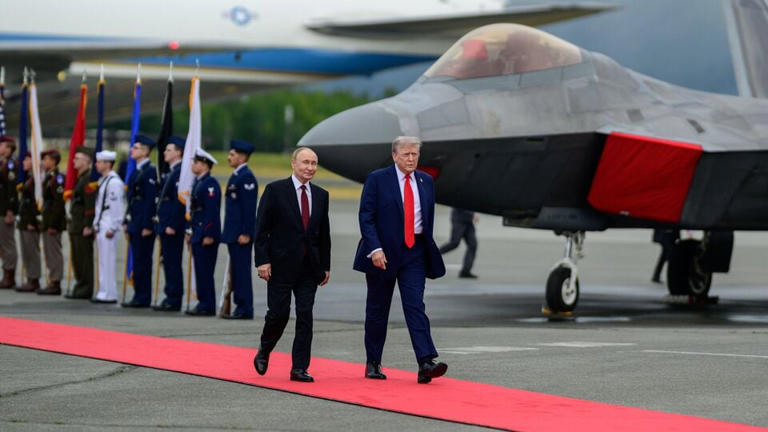
Yet beneath the theatre lay the reality of unresolved conflicts. Ukraine loomed large, as did Russia’s growing alignment with China. Cybersecurity, arms control, and energy politics; all found their way into side discussions, though neither leader seemed intent on producing immediate breakthroughs. Instead, the summit’s true achievement was its ambiguity. By leaving the world guessing, both Trump and Putin retained flexibility. Trump could return home and claim he had opened doors for peace. Putin could tell Russians he had forced America to engage him on ground that once belonged to the Tsars. Both emerged, if not stronger, then certainly not weaker.
For much of the world, however, ambiguity is not reassurance. Europe fears abandonment. China fears encirclement. Smaller states fear irrelevance. The Anchorage meeting underscored the extent to which global politics is being reshaped not by institutions or treaties but by personalities and performances. When Trump and Putin meet, it is not just two men but two narratives colliding: one of American exceptionalism reborn through disruption, the other of Russian resilience reasserted through endurance.
If Trump seeks to build a new world order through personal diplomacy, Alaska may be remembered as a test case. But personal diplomacy has limits. It can unsettle allies and embolden rivals. It can create the illusion of breakthroughs where only atmospherics exist. And it risks substituting spectacle for substance. The handshake in Anchorage may have been historic, but history will judge it by what follows, not what was staged.
The world today is no stranger to disruption, but the Trump–Putin summit has reminded us of an uncomfortable truth: that disruption is no longer confined to the battlefield or the marketplace but extends into the very heart of diplomacy. Alaska, once sold in a forgotten transaction between two empires, became the site where twenty-first-century power politics were rehearsed. Whether it proves to be the opening act of a genuine reset or merely another performance in the long theatre of global rivalry remains to be seen.
For now, one thing is certain: the world is watching not just what Trump and Putin say, but how they choose to tell the story of their encounter. In international politics, stories matter as much as strategies. And in Anchorage, the story told was that of two men, two nations, and two histories meeting on ground heavy with memory, leaving the rest of us to interpret what comes next.