In the century of silicon, sovereignty will belong to those who command the chip, and nations that miss this bus will be condemned to rent their future.
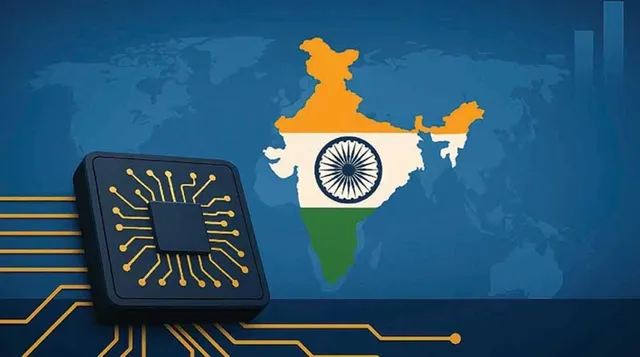
Silicon is the new steel, the new oil, and perhaps the new gunpowder of our age. Nations no longer compete only for territory, markets, or military bases; they compete for semiconductors, the tiny chips that power everything from smartphones and satellites to missiles and medical devices. In today’s fragmented world order, the quest for chips has become inseparable from the quest for sovereignty. For India, a country that has long prided itself on strategic autonomy, the semiconductor race is a litmus test of whether it can truly secure its technological future.
The global landscape could not be starker. The United States and China are locked in a relentless duel, with Washington imposing export bans on advanced chips and Beijing pouring billions into indigenous capabilities. Taiwan, through Taiwan Semiconductor Manufacturing Company Limited (TSMC), still manufactures more than 90 percent of the world’s cutting-edge chips, making it both indispensable and dangerously exposed. Japan, South Korea, and the European Union are investing billions to secure their own chip bases, treating semiconductors as the backbone of national resilience. In this climate, chips are not simply commercial goods; they are the building blocks of geopolitical leverage.
India’s vulnerability is glaring. More than 95 percent of its chips are imported, with little domestic manufacturing to fall back on. The COVID-19 pandemic, when supply chain disruptions rippled through industries from automobiles to consumer electronics, was a rude awakening. The realization that the world’s fifth-largest economy had no control over its silicon lifelines has since propelled New Delhi to act.
But this raises an uncomfortable question: why did India not enter this race earlier? The answers lie in a mix of structural hesitation and strategic blind spots. Semiconductor fabrication has always been an extraordinarily capital-intensive business. A single fab can cost upwards of $10–20 billion, with profitability only after a decade of patient investment. Success required long-term vision, deep subsidies, and industrial ecosystems; factors that countries like Taiwan and South Korea embraced early. India, by contrast, gravitated towards lower-risk, faster-return sectors. The IT services boom of the 1990s and 2000s gave policymakers confidence that India could thrive without heavy bets on hardware. Hardware ambitions faded, and public-sector attempts like the Semi-Conductor Laboratory in Chandigarh were left underfunded and technologically outdated.
That story is particularly telling. The SCL, established in the 1980s, was meant to place India at the frontier of chipmaking. But a fire in 1989 crippled its operations, and instead of rebuilding at scale, successive governments allowed it to stagnate. While Taiwan launched TSMC in 1987 with strong state backing and transformed itself into the world’s chip hub, India allowed it’s one experiment to drift into irrelevance. Bureaucracy, underinvestment, and lack of urgency meant India squandered the same window of opportunity that its Asian peers seized.
The second question follows naturally: if the state hesitated, why did India’s private players not take the lead? After all, the country has produced giants like Wipro, HCL, TCS, Infosys, Reliance, Vedanta, and Tata; firms with global reach, capital, and ambition. Yet even they stayed away from semiconductors. The reasons are revealing. For one, the economics were forbidding. Indian conglomerates preferred IT services, telecom, and pharmaceuticals, where returns were quicker and margins healthier. Chips, by contrast, demanded billions upfront with no guarantee of market share against entrenched giants in Taiwan, Korea, or the U.S.
Equally important, the state did not provide the kind of certainty or backing that makes private risk possible. Unlike Taiwan’s government support for TSMC or South Korea’s nurturing of Samsung, India’s policy environment remained inconsistent. Early proposals in 2007 and 2013 to attract fabs fell through amid bureaucratic delays and half-hearted incentives. Without subsidies, guaranteed demand, or supplier ecosystems, no private investor could justify staking billions. The result was a vicious cycle: the absence of an ecosystem deterred private investors, and the absence of private investment meant no ecosystem emerged.
Meanwhile, global players raced ahead. The United States passed its CHIPS and Science Act in 2022, committing $52 billion in subsidies. China has pledged over $140 billion to build its own industry. Japan and South Korea have offered tax breaks and sovereign guarantees to anchor their firms. The world is breaking into chip blocs; an American-led camp and a China-led camp. India has been left to play catch-up, trying to insert itself as a “swing state” in this technological Cold War.
This late awakening explains why New Delhi’s current push is so significant. The India Semiconductor Mission, backed by production-linked incentives worth billions, represents a belated but necessary attempt to break the cycle. Micron’s planned assembly and test facility in Gujarat is the first visible fruit, signalling that India can attract serious global players. The Tata Group has also announced plans for a semiconductor unit, suggesting that Indian corporates may finally be ready to wade into the deep waters they once avoided.
Yet the gap remains vast. Beyond capital, fabs need world-class infrastructure, uninterrupted power and water, skilled engineers, and most critically, intellectual property rights. India may have one-fifth of the world’s chip design talent, but design prowess has yet to translate into domestic manufacturing muscle. The leap from coding chips to fabricating them is as wide as the gap between writing blueprints and building skyscrapers.
The sovereignty dimension makes this more than an industrial policy. In an era where algorithms and autonomy define security, chip dependency translates into vulnerability. Fighter jets, satellites, drones, digital banking, telecom networks, AI models, all run on imported semiconductors. A supply cutoff, whether due to conflict in the Taiwan Strait or sanctions in a global crisis, would bring entire sectors of the Indian economy to a standstill. Strategic autonomy, a mantra that has guided Indian foreign policy for decades, will ring hollow if the nation’s circuits are wired abroad.
Yet opportunity exists amid constraint. India does not need to replicate Taiwan or South Korea overnight. It can carve niches; chip design, packaging and testing, compound semiconductors, and trusted supply-chain diversification. By aligning with partners in the United States, Japan, and Europe, New Delhi can position itself as a crucial node in the emerging “chip alliances” of the Indo-Pacific. The goal is not absolute self-sufficiency but strategic self-reliance: enough capability to shield sovereignty from global shocks.
To get there, India must act on multiple fronts. First, it must build ecosystems, not just factories—special economic zones with suppliers, chemicals, logistics, and water systems dedicated to chipmaking. Second, it must offer consistent policies and credible incentives, avoiding the stop-start pattern of the past. Third, it must mobilize its private sector, encouraging Tata, Reliance, Vedanta and others to invest not just in assembly but in research, IP, and partnerships. Fourth, it must leverage its democratic credibility to become the trusted alternative to China in global supply chains. Finally, it must view chips as part of national security, integrating defence procurement and strategic requirements into industrial planning.
The stakes are high. Just as coal and oil once reshaped geopolitics, silicon will redraw the map of power in the twenty-first century. India’s past hesitation explains its present scramble, but it need not dictate its future. The lesson is clear: private players cannot move without state vision, and the state cannot succeed without private capacity. In the new Cold War of circuits and codes, survival will depend on whether India can finally marry its demographic dividend with a silicon dividend.
If it succeeds, India may yet move from being a consumer of global technology to a shaper of the technological order itself. The window may have closed once, but in the fragmented tech order of today, new openings are emerging. Missing this bus again is no longer an option because in the century of silicon, sovereignty itself is at stake.
Dr. Gaurav Vaid
Freelance Writer & Analyst
gauravvaid2010@gmail.com
Source: https://greaterjammu.com/epaper/epaper/edition/702/epaper-19-09-2025/page/6