When history whispers and power perform, silence becomes the new diplomacy.
The world has entered an age without anchors. The old alliances still exist in name, the declarations still echo, the summits still convene; yet behind the choreography lies a vacuum. Power today no longer declares; it performs. Alliances whisper through trade deals, summits end in slogans, and morality has become a negotiable currency. After a decade of noise, the world has grown fluent in silence.
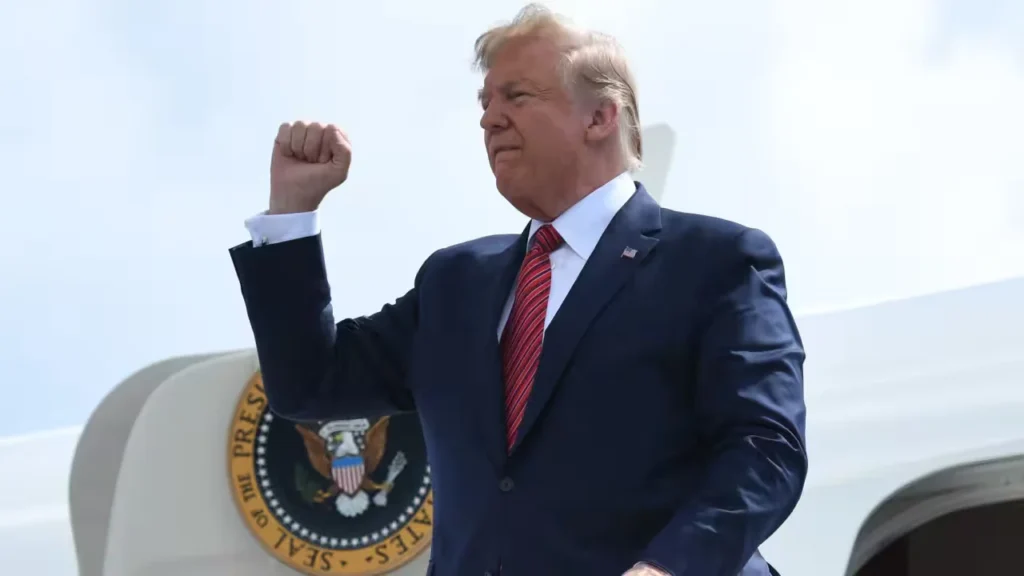
Washington once sold ideals; now it sells outcomes. In the second year of Trump 2.0, foreign policy reads like a balance sheet; cost, leverage, and yield. Ukraine is managed like a subscription, renewed when politically useful, paused when fatigue rises. Sanctions have replaced sermons; arms sales replace aid. The United States still commands unmatched reach in finance, technology, and narrative, yet its moral vocabulary has thinned to a single word: transaction. Leadership endures; legitimacy evaporates. It governs not through persuasion but through presence; the inertia of influence. Even allies now hedge; Europe negotiates autonomy, Japan diversifies deterrence, and the Gulf courts Beijing by daylight while buying F-35s by night.
Across the Pacific, Beijing’s ambitions flow like its rivers — quiet, patient, redirecting everything downstream. From Djibouti to Darwin, from Gwadar to the Pacific, its presence is less invasion than infiltration. Artificial islands have become floating borders; ports political punctuation marks. China speaks of “community of destiny”, yet its real grammar is control: data cables, digital-yuan corridors, surveillance exports. It builds, lends, and listens. Its slowdown is strategic; a pause to consolidate, not retreat. The dragon’s new empire is invisible: supply chains, rare-earth monopolies, algorithmic governance exporting obedience as efficiency. Even as economic headwinds rise, Beijing compensates through narrative; portraying discipline as destiny, planning as peace.
Moscow’s greatest victory has been endurance. What began as punishment became purpose. Sanctions hardened self-reliance, and the Kremlin discovered a new legitimacy among those disillusioned with Western moralism. In Africa and West Asia, Russian mercenaries have rebranded as security contractors, their deployments justified as “sovereignty support”. The battlefield in Ukraine has frozen into symbolism: proof that the West’s unity can tire and Russia’s pain threshold can stretch indefinitely. The Kremlin no longer seeks acceptance; it seeks permanence, carving an identity from defiance. In the global imagination, Russia has recast itself not as superpower but survivor, and in an age of fatigue, survival is prestige.
Europe’s tragedy is not weakness but weariness. The continent that once defined conscience now debates survival. Energy insecurity, migration fear, and populist anger have replaced solidarity. Brussels still issues resolutions, but Paris and Berlin count voters, not values. The far-right feeds on fatigue; the centre apologizes for ideals. Europe’s soft power — culture, law, liberal memory — remains luminous but lonely. The European project endures as nostalgia more than mission. It teaches values it struggles to live; its moral authority turned from conviction to commentary. Yet within its fatigue lies the seed of reinvention; a younger generation demanding climate realism, digital sovereignty, and a Europe that protects as well as preaches.
In the Middle East, conflict no longer shocks; it stabilizes. Gaza’s ruins smoulder while diplomacy rehearses empathy without urgency. Lebanon trembles, Syria festers, and the Red Sea is a chessboard of drones and destroyers. Iran and Israel trade shadows — cyber for cyber, ship for ship — while Washington, Riyadh, and Ankara calibrate outrage to oil prices. The Abraham Accords survive by omission, and humanitarian law lives on paper. Every ceasefire now expires before the ink dries. The region has mastered the cruel science of partial peace; enough war to stay relevant, enough calm to stay in business. Yet beneath the sand, tectonic shifts stir: Gulf monarchies investing in technology rather than theology; Iran courting the East; Israel balancing deterrence with demographic dread. The Middle East’s map may look unchanged, but its moral compass spins endlessly.
South Asia mirrors the world’s contradictions. Afghanistan asserts autonomy through defiance; Pakistan staggers between bankruptcy and denial; Bangladesh experiments with multi-alignment; Sri Lanka rebuilds on borrowed trust. Nepal and Bhutan navigate between the Himalayas and hegemons, balancing survival and sovereignty. And at the centre stands India; practicing a new diplomacy of geometry. New Delhi speaks to Washington in code, to Moscow in continuity, to Beijing in caution, and to Dhaka in confidence. Its strategy is not silence but calibration; a blend of restraint and reach that allows engagement without entanglement. The doctrine once called non-alignment has matured into strategic pluralism: many friendships, no dependencies. India’s moral weight lies in moderation. In an era of extremes, the ability to hold contradictions without collapsing is power.
Across the Global South, a new grammar of dignity is forming. Africa no longer petitions; it negotiates. Minerals, bases, and markets are traded across a crowded table; American investors, Chinese lenders, Indian builders, Russian mercenaries. The continent plays them all, often better than they play one another. Latin America, too, is rewriting its narrative: Brazil’s climate diplomacy, Mexico’s migration leverage, Argentina’s resource politics — all recalibrating hemispheric autonomy. The South no longer waits for invitations; it drafts the agenda itself. From BRICS to the African Union’s seat in the G20, representation is finally translating into relevance. For the first time in decades, global governance feels less like charity and more like arithmetic.
Money has become message. The dollar still dominates, but each crisis strengthens its challengers. BRICS banking expands, rupee-trade corridors lengthen, Gulf currencies flirt with autonomy. Sanctions once weaponized morality; now they advertise division. Markets read every embargo as opportunity, every decoupling as a chance to build parallel systems. Economic coercion, once a Western monopoly, has gone multipolar. Currencies have become flags; credit lines, instruments of consent. Supply chains now function as strategic weapons, and chips have replaced ships as the measure of might. In this marketplace of punishment, every nation sells compliance at its own price.
The newest arms race is invisible. Artificial intelligence, deepfakes, and data manipulation have turned perception into the primary front; the new Cold War of credibility. Information is weaponized not to convince but to confuse. When facts can be fabricated faster than they can be verified, control shifts from those who govern reality to those who generate it. Nations defend not borders but bandwidth; citizens fight not for territory but for truth. Power lies with whoever dictates the rhythm of attention. The war for truth has become the war for time. In this contest, democracy’s greatest vulnerability is distraction itself.
Climate has become another frontier of influence. Carbon credits are the new currency of guilt; green energy the new domain of dominance. The same powers that polluted the planet now profit from its cleansing. Climate summits resemble stock exchanges of virtue, where the poor sell suffering and the rich buy redemption. Technology that could heal the planet has been weaponized into intellectual property. Even the Earth has entered the age of performance; pledges without penalty, applause without accountability. The struggle for sustainability is no longer ecological; it is ethical.
Amid the circuitry of conflict, human feeling is the most expendable resource. Gaza’s grief, Ukraine’s endurance, Sudan’s starvation, Yemen’s silence — each flickers briefly before vanishing into algorithmic oblivion. Outrage is instant, compassion transient. The crowd moves on, and policymakers follow the crowd. The moral bandwidth of humanity collapses under constant exposure. Institutions meant to outlast emotion; the UN, the ICC, the WHO, now function like historical exhibits, reminders of an age when morality was procedural. International law still speaks, but few listen. Justice has become archival, reduced to ritual rather than remedy.
For India, this disorder is not a crisis but a canvas. A nation large enough to matter yet restrained enough to mediate, it can bridge the gap between moral fatigue and strategic necessity. Its challenge is to convert autonomy into architecture; to design diplomacy that protects interests without abandoning ideals. Credibility, not coercion, must be its export. The world does not need another superpower; it needs a steady one. India’s task is to prove that restraint can be relevance, that listening can be leadership. If it can model strength with empathy and restraint with resolve, it may offer what others have lost: moral seriousness without moral superiority. The twenty-first century may yet find in India a rare balance; a nation that seeks respect more than reverence, influence without imposition.
The century will not be remembered for its victories but for its vigilance, the constant struggle to remain human amid efficiency. Every empire shout; every conscience whispers. Yet history suggests that whispers endure. Power redraws maps, but meaning redraws memory. And in this era of silent alliances, where truth competes with trend and justice with fatigue, the last form of courage may simply be to care.
Dr. Gaurav Vaid
Freelance Writer & Analyst
gauravvaid2010@gmail.com
Source: https://greaterjammu.com/epaper/epaper/edition/760/epaper-06-11-2025/page/6