From Kashmir to tariffs, Jaishankar’s blunt diplomacy at the UNGA turned defence into defiance and gave India an assertive new voice in a fractured world.
When India’s Foreign Minister S. Jaishankar rose to speak at the 80th session of the United Nations General Assembly in New York, few expected fireworks. The UNGA, after all, is often a theatre of the predictable: Pakistan recycles its Kashmir script, Turkey echoes it for geopolitical leverage, Western capitals wrap themselves in human rights language, and the world moves on. Yet, what unfolded this time was neither predictable nor forgettable. In a chamber known for endless noise and formulaic ritual, Jaishankar cut through with surgical precision. He did not just defend India. He shut down detractors, challenged institutions, and spoke with a bluntness that left more than a few delegations momentarily silent.
The line that reverberated most was deceptively simple: “You nourish a snake, eventually it will bite you.” Addressed squarely to Pakistan, this was no rhetorical flourish. It was an indictment of a decades-long strategy in Rawalpindi, nurturing militant groups as tools of statecraft. By invoking the recent Pahalgam terror attack, in which civilians and security personnel alike paid with their lives, Jaishankar humanised India’s grievance. Terrorism was not left as an abstract noun; it was placed in the blood-soaked reality of Kashmir.
For too long, Pakistan has treated Kashmir as a stage for international grandstanding, while the world, fatigued by its monotone, has shrugged. This time was different. By tying Pakistan’s complicity in terrorism to a wider global threat, India ensured that Kashmir was no longer a bilateral quarrel whispered on the sidelines. It was a test case for how the international system confronts terrorism. The silence in the chamber after his remarks was telling: not even habitual sympathisers rushed to interrupt.
Jaishankar’s blunt words were not aimed only at diplomats in the chamber. They were also a signal to the global Indian diaspora, now more than 25 million strong. For decades, overseas Indians have wanted their homeland to speak with confidence and clarity on the world stage, not defensively or apologetically. In New York, they heard the kind of India they had long imagined: unapologetic, assertive, and unwilling to be patronised. For the diaspora, it was not just a UN speech. It was a moment of affirmation.
If Pakistan’s interventions at the UN have become stale, Turkey’s occasional attempts to champion Kashmir are newer but equally transparent. For Ankara, Kashmir is not about solidarity but about status, a stage to burnish its credentials as a Muslim power centre. Yet, this time, when Turkey attempted its familiar play, the rebuttal was swift and brutal. Without naming Ankara directly, Jaishankar exposed the hypocrisy of nations with “dubious human rights records” presuming to lecture the world’s largest democracy.
The message was clear: those who jail journalists, muzzle dissent, and manipulate their own borders have no moral standing to sermonise India. In diplomatic language, such confrontations are usually avoided. In New York, India broke the taboo. The result was that Turkey’s intervention, once a headline-grabbing provocation, was reduced to a footnote. The speech also touched a raw nerve in the Global South: the hypocrisy of the West. When terrorism strikes in Paris or New York, it is treated as a global emergency; when it bleeds through Kabul or Kashmir, it is often dismissed as a local problem. When trade rules work in favour of the West, they are called “rules-based order”; when they hurt Western interests, they are quietly bent. By exposing these double standards, India’s message resonated beyond South Asia; it spoke for countries that have long been victims of selective morality in global governance.
Yet Jaishankar’s sharpest arrows were not reserved for adversaries. They were aimed at the very house he was standing in. “Where has the UN made a difference?” he asked, forcing uncomfortable reflection. On terrorism, the Security Council has been paralysed. On conflicts from Ukraine to Gaza, it has been divided along predictable geopolitical lines. On trade and technology, it has been overtaken by unilateralism and tariff wars. The once-hallowed idea of collective security has been hollowed out by selective enforcement and great-power vetoes.
India’s critique was not nihilistic but reformist. The call was for a multilateralism that actually reflects today’s realities: a UN Security Council that does not freeze in 1945, trade rules that do not punish the Global South, and institutions that do not preach morality while practising double standards. For India, reform means not only a permanent seat for itself but also fairer representation for Africa and Latin America, regions that remain voiceless in the highest councils of power. By putting this demand alongside the grievances of terrorism and tariffs, India made it harder to dismiss reform as self-interest. It reframed it as a necessity for the legitimacy of the entire system.
What made the speech unusually layered was its weaving of apparently separate strands into one narrative. Terrorism was not treated in isolation from economics, nor tariffs detached from security. Jaishankar argued that “tariff volatility”, “de-risking”, and unequal market access are as destabilising as armed conflict, particularly for developing nations. In a world where food, fuel, and fertiliser chains are weaponised, economic coercion is no less dangerous than terrorism. This integration of security and economy is where India’s intervention stood out. The Global South has long complained of being crushed between the great powers’ wars and trade battles. By articulating their anxieties, from tariff wars to technology-denial regimes, India projected itself as more than a regional power: it spoke as a custodian of collective grievances.
What made the intervention even more significant was its timing. With Donald Trump back in the White House, tariff wars, H-1B visa restrictions, and market access disputes have returned to the India–US agenda. By openly warning against unpredictable trade barriers, and the dangers of economic coercion, Jaishankar was not just critiquing anonymous distortions. He was speaking directly to Washington. That he chose to do so at the UNGA, in the presence of the very powers India courts as strategic partners, signalled a new confidence: friendship does not mean silence.
There was also a quieter target in the room: China. Though never named, Beijing loomed large in every reference to vetoes blocking terror designations, supply-chain security, and economic coercion through trade. By calling out these practices without descending into open confrontation, India balanced firmness with subtlety. It reminded the world that China’s role in shielding Pakistan-based terrorists at the UN and distorting global trade is not forgotten. The silence of Beijing’s delegation during Jaishankar’s speech was as telling as the applause of others.
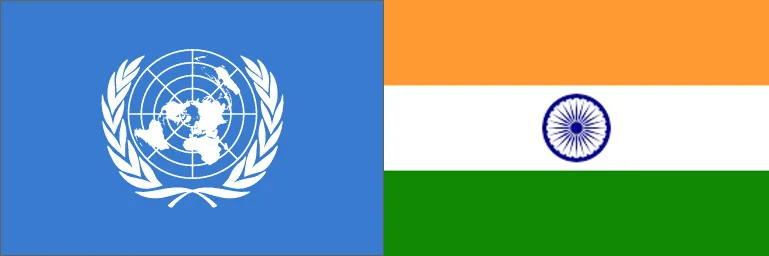
In recent years, India has positioned itself as the “voice of the Global South.” From hosting a virtual summit of developing nations to placing African Union membership on the G20 agenda, New Delhi has sought to align its national interest with global equity. At the UNGA, that strategy was visible. Jaishankar did not speak only of India’s terror wounds or tariff struggles. He placed them in the larger context of Africa’s resource vulnerability, Asia’s fragile security, and Latin America’s economic exposure. This is the crux of India’s evolving diplomacy: to project national pain as universal concern, thereby making it harder for others to dismiss it as parochial. When Jaishankar spoke of double standards in dealing with terrorism, or inequities in trade, he was not just defending India; he was articulating the silent anger of dozens of nations.
Critics may argue that blunt language risks alienating others, that diplomacy is about nuance and compromise. Yet, the old caution has often left India speaking softly while others shouted. This time, the opposite happened. By choosing directness over deference, Jaishankar achieved what carefully crafted phrases rarely do: attention. In the age of soundbites and social media, subtlety is often drowned. That sharp line travels further than paragraphs of legalese. More importantly, it forces others into silence, if not agreement. For once, it was not India that was on the defensive at the UN. It was India’s adversaries who were.
Some may dismiss UNGA speeches as symbolic theatre with little real impact. Yet symbols matter. They set narratives. They define how nations are perceived. In recent years, Pakistan had grown accustomed to using the UN as a stage to embarrass India. Turkey had discovered in Kashmir an easy applause line. Western states had often measured India’s interventions by how closely they mirrored their own concerns. This time, the script was rewritten. Pakistan was called out not as a victim but as a perpetrator. Turkey was exposed as a hypocrite. The UN was reminded of its failures. And India spoke not as a supplicant but as a stakeholder demanding accountability. The symbolic shift is profound. It signals a new India at the UN — one that no longer seeks to be tolerated, but insists on being respected.
Of course, speeches alone do not change realities. Terror networks will not dissolve because of words in New York. Tariffs will not stabilise because of a clever turn of phrase. And the UN, paralysed for decades, is unlikely to reform overnight. Here lies the tension in India’s new diplomacy: rhetoric can shift narratives, but it must be backed by sustained action — coalition-building, reform campaigns, and relentless pressure. Without that, even the sharpest words risk being archived as a memorable soundbite, rather than a turning point.
India is no longer content to play the role of the “responsible, quiet partner” in global forums. It is willing to speak uncomfortable truths, to confront adversaries, and to remind institutions of their failures. This is not a departure from diplomacy. It is diplomacy adapted to an age of blunt power, fractured alliances, and global distrust.
The UNGA speech will be remembered not for its length but for its clarity. It was a moment when India stopped explaining itself and started indicting others. It was a moment when the chamber, used to noise, fell into silence. And it was a moment when, from New York, India’s voice carried not as an echo of others, but as an independent, confident note. Seen against history, the contrast is stark. Jawaharlal Nehru’s interventions at the UN were moralistic, idealistic, and cautious, reflecting a newly independent nation wary of overreach. During the Cold War, India often spoke softly, balancing between blocs while struggling to be heard. Today, that reticence has given way to a very different tone: assertive, unapologetic, and willing to call out hypocrisy. If Nehru represented the voice of aspiration, Jaishankar’s UNGA speech embodied the voice of assertion. It marked a passage from pleading for recognition to demanding respect.
For decades, India’s role at the UN has been described as “aspirational”; aspiring for Security Council membership, aspiring for recognition, aspiring for a voice. This week, aspiration turned into assertion. Whether the world listens or not, one truth is now undeniable: India is no longer on the defensive. It is the one doing the shutting down.
Dr. Gaurav Vaid
Freelance Writer & Analyst
gauravvaid2010@gmail.com
Source: https://greaterjammu.com/epaper/epaper/edition/712/epaper-29-09-2025/page/6