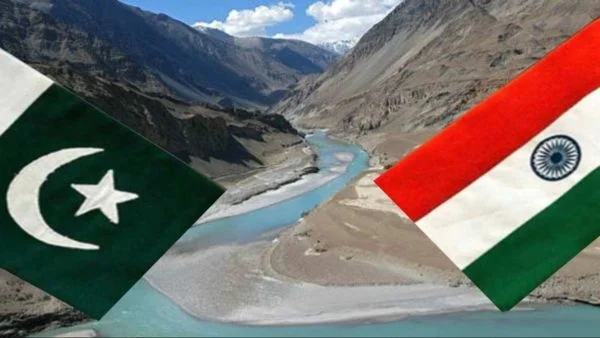
In recent months, India’s recalibration of the Indus Waters Treaty (IWT) has seized both national and international attention. While many citizens celebrate the government’s assertiveness, few fully grasp the depth of planning, study, and strategic patience that culminated in this decisive shift. Far from being an emotional reaction, India’s actions stem from years of groundwork, recalculations, and calibrated innovation.
“No bombs, no bullets — just the roar of rivers reclaiming India’s rights.”
The era of casual neglect over India’s water entitlements is over. A new doctrine — of controlled assertiveness — has emerged, with water now weaponized into a formidable “Water Bomb” of strategic leverage.
Genesis of a Strategic Shift –
The seeds of this recalibration were planted long before recent provocations. Between 2019 and 2020, a detailed reassessment of the Indus Waters Treaty was initiated within the National Security Council Secretariat (NSCS). Recognizing the criticality of water as a strategic asset, experts were inducted into the National Security Advisory Board (NSAB), injecting new vitality into India’s water policy. This move laid the intellectual foundation for a robust review that matured after years of silent preparation.
“Water is life — or leverage, depending on who you are.”
India’s approach reflects strategic wisdom: a careful blend of rights, patience, and readiness.
Exposure of Systemic Negligence –
The 2016 Uri attack served as an inflection point. Investigations unearthed systemic negligence: vast volumes of India’s rightful waters were flowing unutilized into Pakistan, fueling its agriculture and industry at India’s expense. Additionally, endemic corruption, poor reporting, and the degradation of dam infrastructure through siltation had drastically reduced India’s water storage capacities.
These findings demanded urgent and irreversible corrective action.
“They weaponized terror; we weaponized nature — without firing a shot.”
A New Water Management Paradigm: Canals Over Dams –
Recognizing the challenges associated with mega-dam projects — environmental concerns, land acquisition hurdles, and siltation — India strategically pivoted towards expanding its canal networks across Punjab, Haryana, and Rajasthan. This approach offers multiple advantages:
● Restoration of groundwater tables,
● Expanded agricultural reach,
● Reduction of inter-state water disputes,
● Easier maintenance and desilting processes.
This shift symbolizes India’s evolved thinking: sustainable water security through decentralized control rather than obsolete mega-structures.
“From silent neglect to strategic surge — India’s waters now speak louder than words.
Strategic Implementation: Assertiveness Without Provocation –
Since 2016, the Ministry of Jal Shakti has methodically operationalized this vision. Projects like the Ujh and Ratle dams were expedited; meanwhile, surplus waters that once flowed into Pakistan’s Shakargarh bulge are now being redirected to serve Jammu and adjoining Indian territories.
This silent but decisive movement exemplifies India’s ability to assert its rights without provoking direct conflict.
“This is not revenge; it’s recalibration — and the rivers have just begun to flow differently.”
The Water Bomb: A New Form of Strategic Leverage –
The most dramatic manifestation of this new strategy became visible following the Pahalgam incident. While officially reviewing the Treaty, India released controlled surges into the Jhelum river, creating flood-like conditions downstream in Pakistan.
This was no accident — it was a calculated demonstration:
“Floods don’t need armies; they only need resolve.”
The Water Bomb strategy disrupts economies, strains infrastructure, and applies psychological pressure — all without resorting to conventional warfare. It represents a powerful new dimension of non-kinetic, yet highly effective statecraft.
“When diplomacy dries up, rivers become weapons.”
Guarding Against External Manipulation –
Even as India sharpens its strategic tools, it must remain vigilant against external manipulation. Western powers often mask intelligence gathering and influence operations as “academic research” or “conflict resolution” missions — efforts that ultimately aim either to benefit Pakistan or to provoke broader conflict, thereby sustaining arms sales.
India’s brilliance must lie in avoiding these traps — staying calm, focused, and steadily advancing its national interests without becoming reactionary.
“A Water Bomb doesn’t explode — it drowns silence into strategy.”
A New Chapter in India’s Strategic Doctrine –
The recalibration of the Indus Waters Treaty is neither an act of vengeance nor a momentary emotional outburst. It is the culmination of long-term strategic planning, exhaustive study, and courageous decision-making. It reflects a new India — one that refuses to let its patience be mistaken for weakness.
“Water. Weapon. Will.” — these three words now define India’s hydrological strategy towards adversaries.
As citizens, it is vital to recognize and support these informed, mature initiatives — for true national strength lies not in noisy displays, but in the silent, unstoppable power of rivers, reshaping the very course of history …..